In vivo gene therapy requires each lentiviral vector to integrate functions normally provided ex vivo; to address this, we engineer advanced LVs that co-deliver multiple payloads with controlled expression and improved immune targeting, enabling programmable therapeutic responses.
In vivo gene therapy requires that a single lentiviral vector (LV) particle integrates functions that, in ex vivo settings, are typically provided by the culture and manufacturing conditions, including soluble factors, supports, enrichment and cytokines. To overcome this limitation, our lab is expanding the functional capabilities of LVs beyond conventional gene transfer. We are developing advanced vector systems capable of co-delivering multiple types of payloads, alongside regulatory modules that enable precise spatial and temporal control of gene expression. This approach allows targeted modulation of specific cell populations within complex tissue environments, such as tumors. In parallel, we investigate the biodistribution of LVs following systemic in vivo administration and engineer vector properties to enhance selective targeting of immune cell subsets. By integrating vector engineering with immunology and systems-level analyses, we aim to create programmable delivery platforms capable of rewiring cellular behavior, boosting immune responses, and ultimately improving therapeutic efficacy.
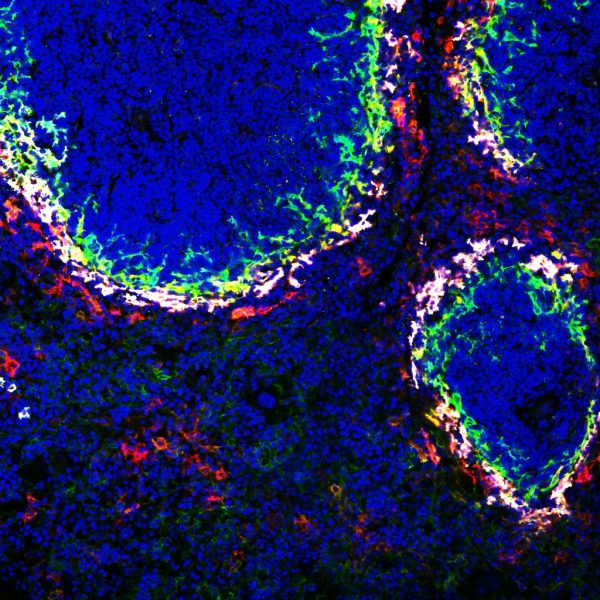
Credits: Chiara Bresesti, IF confocal image of a spleen